
(Illustration: GamingPlanet.nl)
Old games usually do not vanish in one dramatic moment. They become awkward, unavailable, half-supported, or tied to an account system nobody is watching anymore.
Game preservation can sound like a job for archives, museums and people wearing white gloves. That is only half the story. Professional preservation matters, obviously, but it also starts with ordinary players keeping their boxes, shops matching manuals with the right games, and collectors remembering which version belongs with which release.
That matters more than it may seem. In 2023, the Video Game History Foundation published a study saying that 87 percent of classic games in the United States were no longer commercially available. That does not mean every one of those games is gone forever, but it does mean the normal legal route is missing for a huge part of gaming history. For such a young medium, that is uncomfortable.
Digital stores solve part of the problem, but not all of it. A game can be available today and disappear tomorrow because of rights issues, expired music licences, server dependencies or plain technical mess. Even when the installer still exists somewhere, the game may struggle with modern Windows builds, new graphics drivers or screen resolutions the original developers never had to think about.
That is why projects like the GOG Preservation Program are worth watching. GOG says selected classics are tested, updated and kept playable on modern systems, with DRM-free downloads and technical support. It is not a magic answer for the whole history of games, but it points to the real issue: storing an old game and keeping an old game usable are two different jobs.
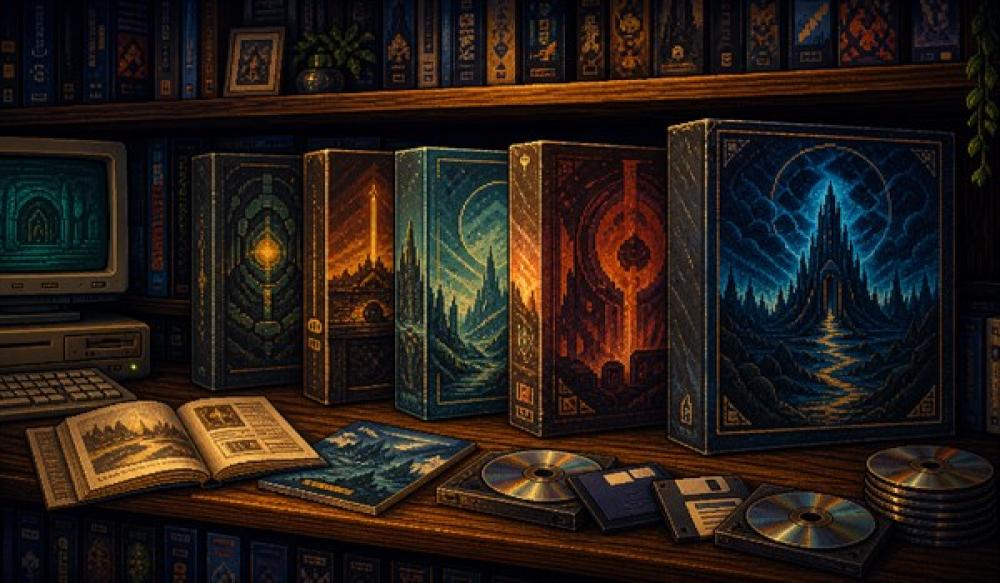
Physical copies still matter in that picture. Not just because they look good on a shelf, but because they preserve context. A box, manual, reference card or registration form tells you something about the moment the game came from. What hardware did it expect? How was multiplayer explained? Which screenshots did the publisher trust? Those details are easy to lose when only the download survives.
The healthiest kind of preservation is usually a mix of things. Keep the original material as documentation, note missing parts, record patches and version numbers when possible, and be honest about reproductions or assembled copies. For collectors, that is good practice. For future players and researchers, it is genuinely useful.
Not every game needs to become sacred. Some games are interesting because they were odd, cheap, local, stubborn or technically strange. Those are often the first ones to fall out of view. If someone wants to understand how broad PC gaming really was ten or twenty years from now, they will need more than the famous titles.
Tags: Retro gaming, Preservation, Game ownership, PC
 ,
,
 ,
,
 ,
,

Copyright © 2008-2026, GamingPlanet.nl