

(Image credit: © Ubisoft)
Stop Killing Games has reached one million signatures for its European citizens' initiative today. That is more than a campaign milestone. It turns the meaning of game ownership into a political question.
One million signatures sounds tidy. A round number, a headline, a short celebration. With Stop Killing Games, it feels messier than that. This is anger that has built up slowly among players who found out that a purchased game does not always stay purchased.
The basic idea is simple enough to fit on a receipt: if a publisher sells a game, that game should not completely disappear when official support ends. That does not mean servers must run forever. It does mean publishers should have an end-of-life plan before shutting things down. An offline mode, private server support, a final patch, documentation, something that stops the game from turning into an empty shortcut.
For anyone who grew up with cartridges, CD-ROMs and chunky PC boxes, that almost feels obvious. An old game could become difficult, sure. New Windows version, missing driver, strange copy protection. But the object was still there. You could search, tinker, patch, complain a bit, and often get it running in the end.
Online-dependent games are different. When the server closes and no alternative exists, the store page is not the only thing that disappears. The playable version of the game disappears with it.
The movement was pushed forward by Ross Scott of Accursed Farms and grew into several actions across different countries. In Europe, it runs under the official name Stop Destroying Videogames. Organisers including Aleksej Vjalicin and Daniel Ondruska are asking the European Commission to examine rules around games that are made unusable after being sold.
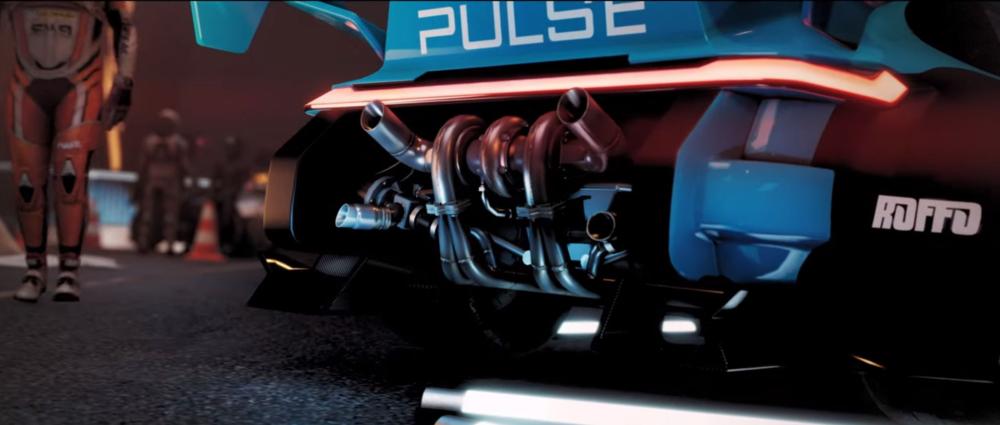
The Crew is the example that keeps coming back. Ubisoft took the online racing game offline, leaving players with a paid game they could no longer use normally. You can argue about licences, server costs and technical complexity, but the feeling for many players was blunt: hang on, was this not in my library?
Today that feeling reached the level where Brussels at least has to look at it, assuming enough signatures are validated. That last part matters. One million is the threshold, but campaigns usually aim higher because checks after the fact can remove invalid signatures.
It would be too easy to pretend this is only a matter of pressing an "offline mode" button. Modern games can depend on matchmaking, accounts, anti-cheat, cloud saves, licences, stores, limited-time events and server code that was never meant to be public. Some games are technically more network than box.
That is exactly the point. If a game is built so that it cannot exist without a central service, then it needs an end plan from the beginning. Not on the day the plug is pulled. Not in a forum post nobody reads. And certainly not after players have spent years paying for expansions, seasons, coins or cosmetic items.
For developers, that can be difficult. For publishers, it can cost money. For players, it is the line between renting and owning, while stores often still use the language of ownership.
Game preservation is not only about games from 1989. It is also about games from 2014, 2020 or 2025 that may be almost invisible ten years from now. A boxed PC game with a battered cover can still tell you a lot: system requirements, art, a manual, patch history, even the marketing language of its time. A dead live-service game mostly tells you that someone decided there was nothing left worth keeping.
That is why Stop Killing Games matters to collectors. Not because every online game automatically becomes a classic, but because nobody knows on launch day which games will turn out to matter later. History is rarely polite enough to give us a shortlist in advance.
Maybe this initiative will only lead to a debate, a study or a compromise that does not go as far as players hope. Even then, today's milestone matters. A subject that spent years living in comment sections and old forum threads is now standing at the door of politics.
That says something.
Games do not disappear because nobody loves games. They disappear because nobody is made responsible in time for what remains.
Sources: Stop Killing Games, European citizens' initiative Stop Destroying Videogames, Euronews on the milestone.
Tags: News, Preservation, Game ownership, PC