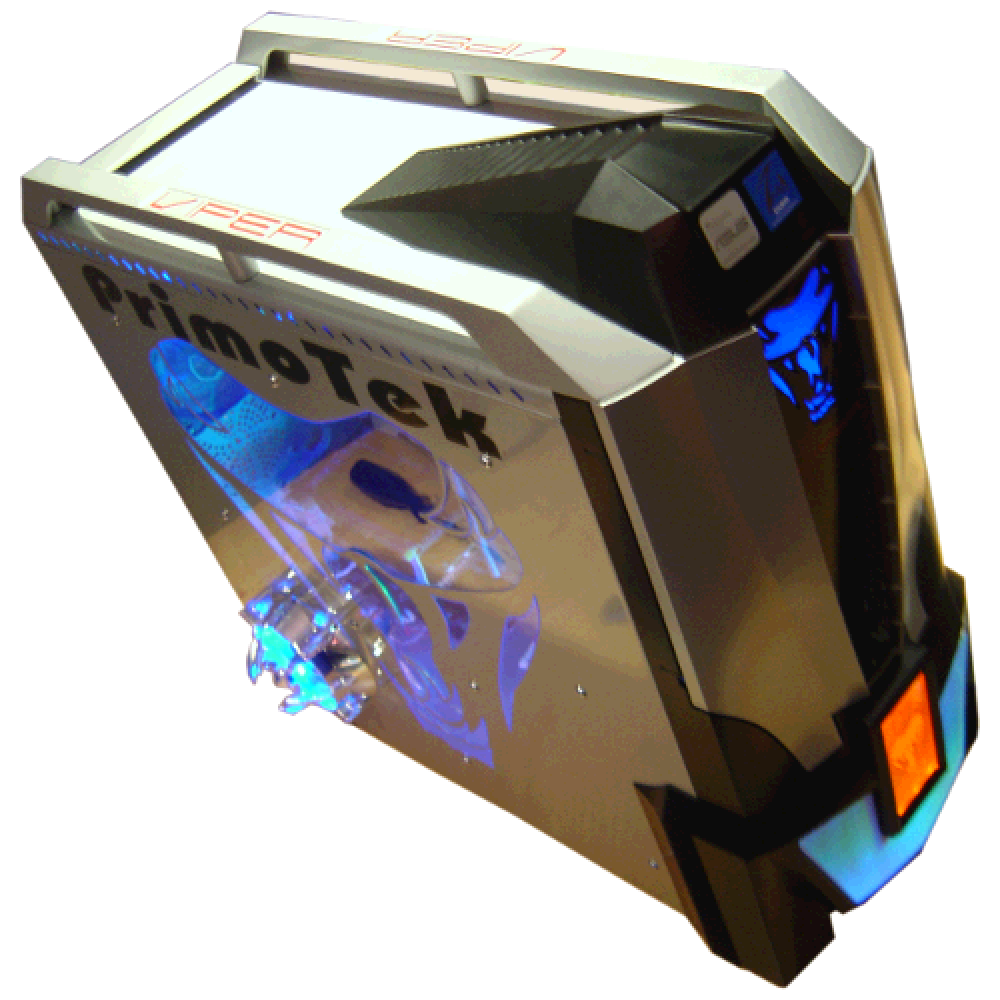

(Photo: GamingPlanet.nl)
If you ever carried a heavy PC case, a monitor and a bag full of cables to a friend's house, you know online multiplayer only tells half the story.
An old LAN party was rarely elegant. Someone had lost a network cable. Someone's PC could not see the shared folder. Someone needed a patch that everyone else already had. Still, it usually came together after a bit of swearing, chair-moving and cable tracing. The moment the first server appeared in the list, the mess became part of the fun.
For many PC players in the late nineties and early 2000s, that was normal. Broadband was not a given, online services were less polished, and a local network felt fast, immediate and slightly magical. You brought your own machine, plugged it into a switch or router, and suddenly every computer in the room belonged to the same small world.
The appeal was not just technical. It was the shared room. You heard the reaction from someone who had just been taken out, noticed who went suspiciously quiet across the table, and could argue about the next map while reaching for the same pile of drinks and snacks. Games like Quake III Arena, Unreal Tournament, StarCraft, Command & Conquer and Counter-Strike became social tools as much as games.
The hardware became part of that culture too. Big beige cases slowly made room for side windows, handles, fan controllers, neon, UV cables and later LED lighting. Some of those cases were not exactly practical, but they said something about the period. A PC was allowed to be seen. It was no longer just a box under a desk, but a calling card for the person who built it.
Playing online is much easier now, and that is a good thing. Nobody needs to carry a CRT monitor down the stairs just to play multiplayer. But something changed along the way. Voice chat is useful, yet it does not capture everything. A LAN evening has friction in the best sense: setting up, waiting, helping someone fix a driver, eating together, changing settings, playing one more round because everyone is still there anyway.
That is why old LAN games are still fun to revisit. Not only because of nostalgia, but because their design is often clear and immediate. Levels load quickly, rules are easy to read, teams can be shuffled, and a match is allowed to be messy. You do not need to understand a battle pass, a daily challenge or a seasonal menu before starting. You launch the game and see who joins.
Maybe that is the real charm. Old LAN games remind us that multiplayer is not only a connection between machines. It is also an arrangement between people. Sometimes with too few power sockets, sometimes with a loud fan in the corner, but once it works, it is hard not to play another round.
For more on old PC games, hardware and physical releases, continue with Retro PC games and PC big boxes or the Big Box PC Games overview.
Tags: Retro gaming, LAN, PC
 ,
,
 ,
,
 ,
,

Copyright © 2008-2026, GamingPlanet.nl