
(Illustration: GamingPlanet.nl)
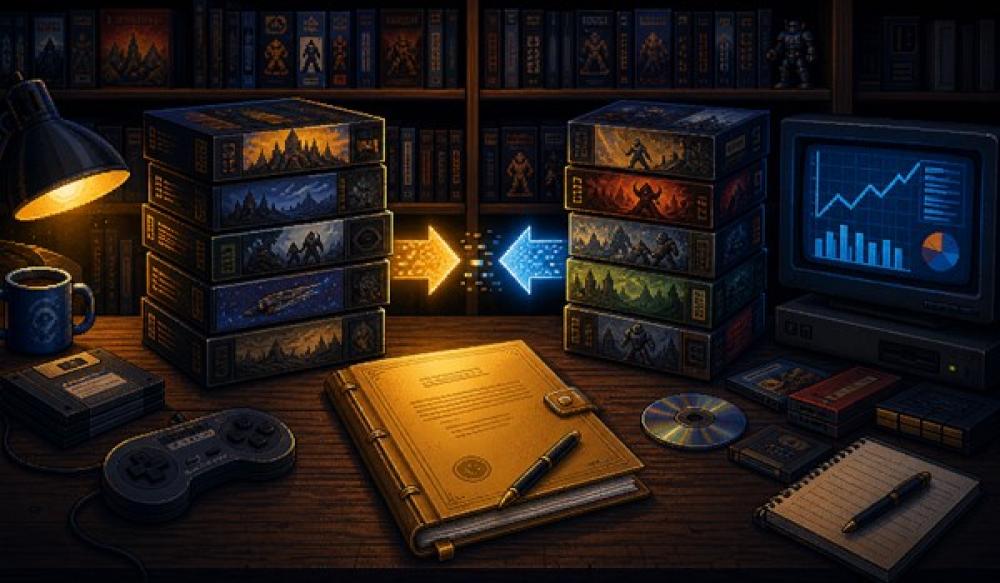
Microsoft completed its acquisition of Activision Blizzard today. For $68.7 billion, Xbox receives Call of Duty, Warcraft, Diablo, Overwatch and Candy Crush — along with what is probably the largest spreadsheet ever placed beside a games console.
After almost 21 months, several regulators, an American court case, a British block and enough legal documents to collapse a modest bookcase, it is official: Activision Blizzard King belongs to Microsoft.
The acquisition was announced on 18 January 2022 and completed today, 13 October 2023. It is the largest takeover in the history of the video game industry and the largest Microsoft has ever completed. The agreed value is $68.7 billion, including Activision Blizzard's net cash. Microsoft offered $95 per share, entirely in cash.
Xbox is not merely receiving a few recognisable games. Microsoft now owns a collection of franchises covering almost every part of the market: Call of Duty on console and PC, World of Warcraft and Diablo at Blizzard, and through King, the enormous mobile audience of Candy Crush.
The Xbox logo now sits above a company producing shooters, MMORPGs, strategy games, mobile puzzle games and esports. Anyone who still thought "Xbox" only meant a box beneath the television has some reading to do this afternoon.
When Microsoft announced the deal in early 2022, the company expected to complete it during its 2023 financial year. That proved optimistic. The proposal became a global test of how much influence one platform holder should be allowed to collect in a market increasingly built around subscriptions, digital stores and cloud gaming.
Microsoft argued that the combination would bring games to more players. Activision Blizzard would report to Microsoft Gaming, while its many franchises could eventually become an important part of Game Pass. At announcement, Microsoft said completion would make it the world's third-largest gaming company by revenue, behind Tencent and Sony.
Opponents saw a different future. Microsoft already owns several parts of the route between developer and player through Windows, Xbox, Azure, Microsoft Store and Game Pass. If the same company also owns Call of Duty and other essential games, it could use that content to strengthen its consoles, subscriptions and cloud services.
The debate quickly stopped being only about who could hang the Activision sign above the door. The real question was where Call of Duty could be played ten years from now, under which conditions and whose permission would be required.
This is the kind of question lawyers prefer to answer in 400 pages. Regulators proved willing to read all of them.
No franchise received more attention during the process than Call of Duty. The series appears annually, sells enormous numbers and gives many players a reason to remain with a console platform. Sony argued that Microsoft could make the game exclusive, degrade the PlayStation version or place Call of Duty directly into Game Pass while PlayStation players continued paying full price.
Microsoft maintained that sending away such a large PlayStation audience would make little economic sense. It offered long-term agreements to keep Call of Duty on other platforms and eventually entered a binding agreement with Sony. Nintendo also received a ten-year commitment concerning Call of Duty, provided the technology allowed it.
The discussion extended beyond exclusivity. A game does not need to disappear completely to disadvantage a platform. Differences in release dates, performance, features, price or subscription access can also influence where players buy their next console.
Microsoft therefore buys Call of Duty today, but not the freedom to place an enormous green Xbox lock around it tomorrow without consequences. The commitments, agreements and attention of regulators travel with it.
In the United States, the Federal Trade Commission attempted to stop the acquisition. The FTC argued that Microsoft could suppress competitors in consoles, subscription services and the rapidly developing cloud gaming market.
The regulator began an administrative proceeding in December 2022 and went to federal court in June 2023 to seek a preliminary injunction. Without such an order, Microsoft and Activision could potentially complete the transaction before the FTC's internal proceeding was resolved.
Judge Jacqueline Scott Corley denied the request on 10 July. The court found that the FTC had not sufficiently shown the merger was likely to substantially reduce competition. Microsoft had secured a crucial victory, and an attempt to pause the transaction during appeal also failed several days later.
This does not mean the FTC suddenly considers the acquisition a wonderful idea. The regulator appealed and resumed its administrative case. Microsoft may complete the deal, but on this publication date the American legal battle is not definitively over.
An acquisition can apparently be complete and still exist inside a lawsuit. Schrödinger would be proud, although he would probably have preferred a smaller box.
The European Commission approved the acquisition in May, subject to conditions. The Commission saw less danger in the console market than Sony and the FTC had emphasised. It believed Microsoft would have little financial incentive to remove Call of Duty entirely from PlayStation, and even doing so would not necessarily cause serious harm to console competition.
Cloud gaming was a different matter. Microsoft already owns strong components through Windows, Azure, Xbox and Game Pass. Activision Blizzard offered very few of its games through cloud services at the time. Microsoft could use the acquisition to make that catalogue exclusive to its own cloud environment and gain an early advantage in a young market.
To secure approval, Microsoft promised European players a free licence to stream their purchased Activision Blizzard games through any suitable cloud gaming service. Cloud providers would receive corresponding rights to offer those games. The obligations last ten years.
It was an unusual outcome. A regulator granted permission because, in its view, the acquisition could create more access to cloud gaming in Europe than existed without the deal.
Whether players will look back in ten years and see a breakthrough or mainly an extraordinarily complicated licensing arrangement remains to be seen. Today, at least, nobody has found the instruction manual inside the box.
The most difficult obstacle stood in the United Kingdom. The Competition and Markets Authority, better known as the CMA, blocked the original acquisition in April. Again, the final concern was not Call of Duty on PlayStation, but cloud gaming.
Microsoft has a strong global position through Windows and Azure and already controls a substantial catalogue through Xbox. The CMA feared Activision Blizzard would give it an advantage competitors could not easily overcome. It considered Microsoft's proposed behavioural agreements too complicated to supervise for years.
After the American court case, almost the entire deal appeared ready, but Microsoft and Activision could not simply proceed globally without British permission. Rather than only continuing to fight the CMA in court, Microsoft submitted a restructured transaction in August.
The most notable concession is that Ubisoft receives cloud streaming rights outside the European Economic Area for every existing Activision Blizzard game and new PC and console games released during the next fifteen years. Microsoft cannot independently reserve those rights for Xbox Cloud Gaming. Where necessary, it must obtain licences through Ubisoft like other providers can.
Ubisoft can commercialise the rights under different business models and may even require Microsoft to adapt a game for an operating system other than Windows when a cloud provider needs it.
This is not a minor footnote. Microsoft is buying Activision Blizzard, but had to remove a future piece of distribution from the box and hand it to a competitor before delivery.
The revised deal convinced the CMA. This morning, the British regulator granted final approval. A few hours later, Microsoft could bring out the flag, the champagne and presumably a very tired group of competition lawyers.
The name Activision Blizzard hides how broad the purchase really is. Microsoft is effectively acquiring three major operations, each with a different position in the market.
Activision publishes Call of Duty and controls studios including Infinity Ward, Treyarch, Sledgehammer Games, Raven Software and Beenox. Crash Bandicoot, Spyro and Tony Hawk also sit inside its catalogue. The annual Call of Duty schedule alone makes Activision a production machine supported permanently by several studios.
Blizzard brings World of Warcraft, Diablo, Overwatch, Hearthstone and StarCraft. These are not only recognisable names, but long-running online communities with their own subscriptions, events, competitions and expectations. World of Warcraft players, for example, have spent almost twenty years accepting that Blizzard ultimately decides what their world becomes.
Microsoft now sits above Blizzard.
Then there is King. Candy Crush receives less attention in acquisition debates than Call of Duty, probably because a row of coloured sweets looks less threatening than a soldier carrying a rifle. Commercially, King is one of the most important parts of the transaction. Microsoft gains an enormous position on phones and tablets, precisely where Xbox has remained relatively small.
Microsoft is not buying a large console publisher with a pleasant mobile division attached. It is simultaneously buying a console and PC publisher, one of the world's most recognisable PC studios and a mobile giant.
For Xbox players, the most immediate question is which games will arrive on Game Pass. Microsoft said at announcement that it intended to add Activision Blizzard games to the subscription service. Phil Spencer writes today that the work of bringing Activision, Blizzard and King franchises to Game Pass and other platforms now begins.
There is no magical button beside the acquisition contract that immediately drops decades of games into a subscription. Licences, technical versions, existing commercial agreements and different account systems must first be sorted out. Microsoft says it will share more information later.
Anyone opening Game Pass this afternoon expecting Call of Duty, Diablo and every missing Guitar Hero to fall out of the menu like confetti will therefore need some patience.
Over time, the catalogue could fundamentally change Game Pass. Microsoft now owns enough ongoing series to keep feeding recognisable names into a subscription. That makes Game Pass more attractive, but also increases one company's power to decide which games remain available, which subscription contains them and how much that subscription costs.
A large library is convenient. A large library whose owner also controls the shop, console, cloud and front door deserves additional attention.
Phil Spencer stresses today that players remain welcome whether they use Xbox, PlayStation, Nintendo, PC or mobile. That is not merely friendly wording. Activision Blizzard earns enormous amounts outside Xbox, and Microsoft repeatedly promised during regulatory proceedings to keep its games broadly available.
Call of Duty therefore remains on PlayStation. The question now shifts from whether the series stays to how the different versions relate over time. Will every game launch simultaneously? Will content remain equal? Which advantages will Game Pass receive? And how will future subscription prices be decided?
World of Warcraft and other Blizzard games raise different questions. There, the issue is less about a console battle and more about accounts, subscriptions, Battle.net and the degree to which Microsoft wishes to connect its own services with Blizzard's.
Very little visibly changes for players today. Games still launch from the same places, existing accounts remain and nobody is redirected into an Excel workbook halfway through a Call of Duty match.
The decisions about all those systems are now ultimately taken inside the same company, however.
Microsoft is not the only company expanding by buying studios and publishers. Sony acquired Bungie, Embracer spent years collecting companies and Tencent owns interests across a large part of the industry. The scale of this deal is different, however.
After its earlier purchase of Bethesda, Microsoft now also owns Activision Blizzard King. Within a few years, The Elder Scrolls, Fallout, Doom, Call of Duty, Warcraft, Diablo, Overwatch and Candy Crush have entered the same corporation.
That may offer benefits to players. Studios gain access to more money and technology, older games may return and subscriptions may offer more content. A company such as Microsoft can invest at a scale unavailable to an independent publisher.
Concentration also creates risks. When fewer companies own more familiar series, players, workers and smaller distributors have fewer alternatives. A poor strategy then affects not one studio or franchise, but an increasingly large share of the market.
The regulatory proceedings prevented Microsoft from buying everything it wanted without conditions. Cloud rights moved elsewhere, long-term licences were promised and Call of Duty will remain under close observation. The central fact remains that an unprecedented collection of games changed ownership today.
Microsoft can finally say Activision Blizzard King is part of Xbox. For the company, this ends a process that lasted longer than some Call of Duty servers remain busy after the next instalment appears.
For players, the most interesting part is only beginning.
We do not yet know how quickly the catalogue enters Game Pass, which older franchises receive new attention or how independently Activision, Blizzard and King will operate within Microsoft. We also do not know how the acquisition affects prices, subscriptions, employment and the relationship between Xbox and PlayStation.
We do know that Call of Duty, World of Warcraft and Candy Crush now ultimately share an owner. A military shooter, a nearly twenty-year-old online world and a game about sweets occupy the same Microsoft strategy.
It sounds like the beginning of a bad joke.
It is mainly the beginning of a very large games company.
Sources: Xbox Wire: Activision Blizzard King joins Xbox, Microsoft: acquisition announcement, Competition and Markets Authority: approval of the restructured acquisition, European Commission: conditional approval, Federal Trade Commission: Microsoft/Activision Blizzard proceeding.
Tags: News, Microsoft, Xbox, Activision, Blizzard, King, Call of Duty, World of Warcraft, Candy Crush, Acquisitions, PlayStation, Ubisoft