

SEGA article
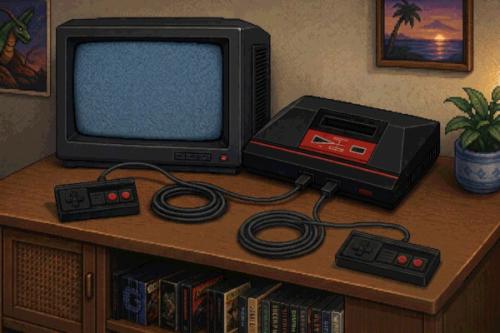
For many players, the Master System feels like the real beginning of Sega at home. Historically, though, it came after the SG-1000, SG-1000 II and Mark III.
This dossier looks at the Master System as the machine that made Sega's hardware line more recognisable, while still carrying clear links to the older systems that came before it.
The Master System was not Sega's first home console. That place belongs to the SG-1000 from 1983, followed by the SG-1000 II and the Mark III.
In Japan, Sega released the Master System on 18 October 1987 as an expanded form of the Mark III, with built-in FM sound, rapid fire and direct support for the 3-D Glasses. That makes it a later stage in one hardware line rather than a clean restart.
The SG-1000 dossier shows that Sega's home-console story started earlier than many people remember. The Master System matters because it gathers those earlier steps into a machine that feels much more like a fully formed Sega console.
That makes it historically useful. It links the experimental early years to the later era of Mega Drive, Saturn and Dreamcast, where Sega became far more widely recognised outside its earliest audience.
The Master System looks more familiar to later collectors than the SG-1000, but it did not appear out of nowhere. Official Sega history presents it as an enhanced Mark III, and that lineage matters when you want to understand the platform properly.
For preservation, that means paying attention not only to the console shell, but also to media formats, controllers, region-specific releases and accessories that carried over or changed along the way.
The Master System belongs to a part of Sega history where cartridges, card-based games, boxes, manuals and hardware revisions all matter. The machine is a reminder that console preservation is rarely only about a ROM dump or a loose cartridge.
When a collector records a Master System release, it also helps to note the exact region, the presence of manuals and cards, the controller type and the condition of the console itself.
The Master System sits in the middle of Sega's longer home-console arc. It is close enough to the SG-1000 line to preserve that technical heritage, but recognisable enough to point forward to the machines many players remember best.
Following the Master System naturally leads into hardware generations, regional variants, physical releases and the wider question of how console history should be preserved when machines evolve in small steps.
 ,
,
 ,
,
 ,
,

Copyright © 2008-2026, GamingPlanet.nl